
Key facts
Start here
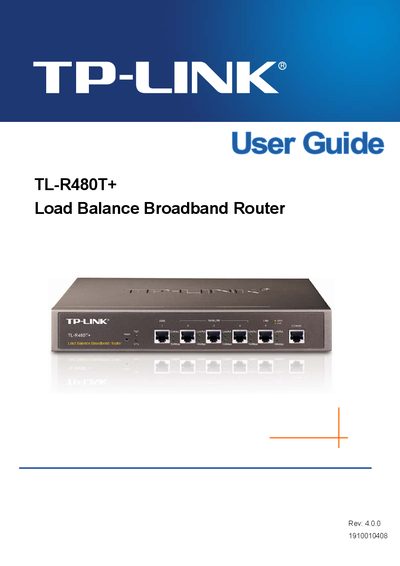
TP-Link TL-R480T+ User Manual
This manual introduces the TL‑R480T+ Load Balance Broadband Router, describing its key features such as three adjustable WAN/LAN ports, built‑in NAT/DHCP, firewall, VPN passthrough and traffic‑management capabilities. It is intended for small‑to‑medium enterprises and internet cafés that need reliable load‑balancing and fail‑over.
The guide covers hardware installation, quick start setup, detailed configuration of WAN, LAN, QoS, security, remote management, and includes appendices with specifications, lightning‑protection advice, a FAQ and a glossary of networking terms.
TP-Link TL-R480T specifications
| Supported standards | IEEE 802.3, 802.3u, 802.3x |
|---|---|
| QoS support | IP address‑based QoS |
| Remote management | Web interface on port 88 (http://192.168.0.1:88) |
Source: TP-Link TL-R480T+ User Manual
All TP-Link TL-R480T documents by type
Day-to-day operation, settings and troubleshooting. Start here if the product is already set up.
Questions answered in these manuals
How do I access the router’s remote management interface?
Open a web browser and go to http://192.168.0.1:88 (the router’s LAN IP address with port 88).
What does DDNS stand for?
DDNS stands for Dynamic Domain Name System.
How do I reset the TL‑R480T router to factory defaults?
Press the Reset button for five seconds, or use the Factory Defaults function in System Tools.
How can I change the web management port to avoid conflict with a web server?
In Security → Remote Management, enter a port number other than 80 (e.g., 88) and save the setting.