
Key facts
Start here
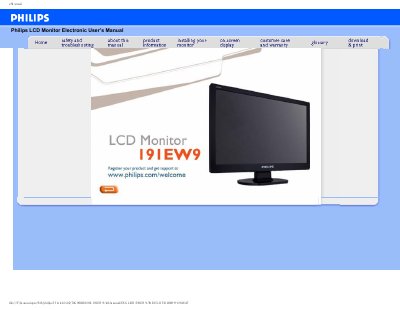
Philips 191EW9 LCD Monitor User Manual
This manual covers safe handling, installation, and everyday use of the Philips 191EW9 LCD monitor. It includes safety precautions, maintenance tips, and troubleshooting steps to help you keep the display operating reliably.
The document also contains detailed technical specifications, pin assignments, VESA mounting information, and a pixel‑defect policy, plus a comprehensive FAQ section that answers common setup and usage questions.
Philips 191EW9 specifications
| LCD panel type | TFT LCD |
|---|---|
| Screen size | 18.5" visual |
| Pixel pitch | 0.30 x 0.30 mm |
| Resolution | 1366 x 768 pixels |
| Vertical refresh rate | 56 Hz‑76 Hz |
| Horizontal frequency | 30 kHz‑83 kHz |
| Power supply | 100 ~ 240 VAC, 50/60 Hz |
| Power consumption | <35 W (typ.) |
| Operating temperature | 0 °C – 40 °C |
| Storage temperature | -20 °C – 60 °C |
| Relative humidity | 20 % – 80 % |
| Tilt range | -5° – 20° |
All Philips 191EW9 documents by type
Day-to-day operation, settings and troubleshooting. Start here if the product is already set up.
Questions answered in these manuals
When I install my monitor what should I do if the screen shows 'Cannot display this video mode'?
Set the monitor to the recommended video mode of 1366 × 768 @ 60 Hz and adjust the Windows display settings accordingly.
What does 'refresh rate' mean for an LCD monitor?
LCD monitors display a stable, flicker‑free image at 60 Hz, so the refresh‑rate value is less critical than for CRTs.
How can I adjust the screen resolution?
Open Windows Display Properties and select the desired resolution, such as 1366 × 768 pixels at 60 Hz.
How should I clean the LCD screen?
Use a soft, lint‑free cloth; for thorough cleaning use a mild detergent solution, avoiding alcohol or other solvents.