
This document introduces the use of Agilent ZORBAX 3.5 µm particles in HPLC rapid gradient separation of plant hormones.
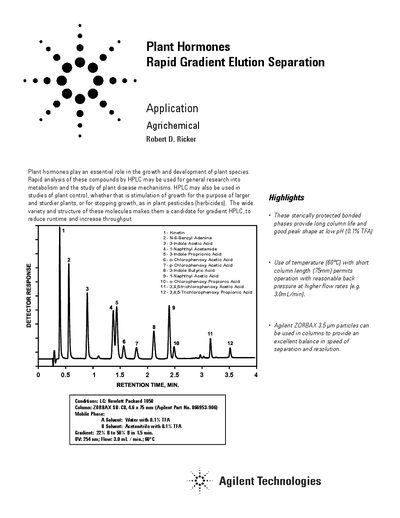
This document details an application for analyzing various plant hormones, such as Kinetin and Indole Acetic Acid, using High-Performance Liquid Chromatography (HPLC). The method utilizes rapid gradient elution to reduce analysis time while maintaining resolution for these sterically protected compounds.
The recommended setup involves the Agilent ZORBAX SB-C8 column with 3.5 micron particles. Key operating conditions include a temperature of 60°C, a flow rate of 3.0 mL/min, and a mobile phase gradient increasing from 22% to 50% acetonitrile (with 0.1% TFA) over 1.5 minutes.
Rapid analysis may be used for general research into metabolism and the study of plant disease mechanisms.
Gradient HPLC is used to reduce runtime and increase throughput due to the wide variety and structure of the molecules.