
Describes the package construction, thermal characterization challenges and some systemic examples utilizing heat sinks of Fairchild Semiconductor Dual CoolTM MOSFETs.
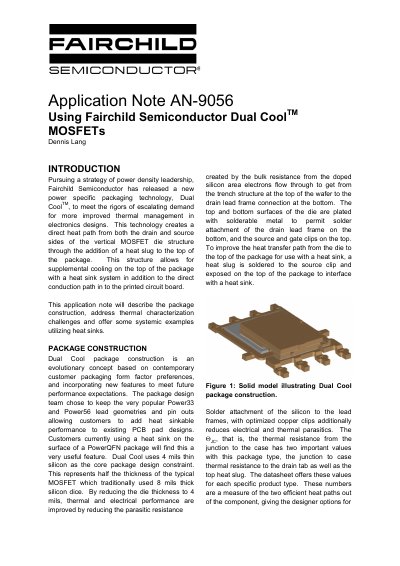
This document details the Fairchild Semiconductor Dual Cool packaging technology, which features a heat slug on the top of the package to allow for supplemental cooling in addition to the standard drain-to-board conduction path. The note explains that this design uses 4 mils thin silicon to improve thermal and electrical performance compared to traditional 8 mil thick silicon dice.
The document addresses the challenges of thermal characterization for board designers, particularly when using infrared thermographs with heat sinks. It proposes a test methodology involving the attachment of a thermocouple to an unplated via in the drain pad to accurately measure junction temperatures. The text also includes experimental results comparing the thermal performance of Dual Cool, clip-bonded, and wire-bonded devices using different thermocouple sizes.
The document recommends using a 36 gauge thermocouple because it has less impact on the data and allows for a smaller drilled hole.
The verification boards used in the study had a 28 mils diameter hole drilled for the thermocouple.
Up to 25% voiding is considered acceptable and not problematic for the verification board.