
This is an application note that introduces the application of mass spectrometry with evaporative light scattering detection
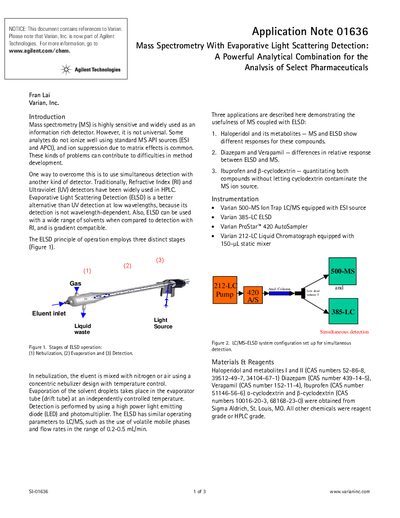
This document describes an analytical method combining Mass Spectrometry (MS) with Evaporative Light Scattering Detection (ELSD). It addresses limitations in standard MS analysis, such as poor ionization of certain analytes and matrix effects. The note details how coupling these detectors allows for simultaneous detection or serial/selected detection using a divert valve.
Three specific pharmaceutical applications are presented: the analysis of Haloperidol and its metabolites, the differentiation of Diazepam and Verapamil responses, and the quantitation of Ibuprofen in the presence of B-cyclodextrin. The text provides specific instrument configurations, HPLC conditions, and parameter settings for both the MS and ELSD systems.
While these compounds show significantly different responses in full scan MS, they exhibit a relatively equal response in the ELSD detector.
The ELSD has similar operating parameters to LC/MS, utilizing flow rates in the range of 0.2-0.5 mL/min.