
GMKDS 3/2-7,62 is a PC terminal block from PHOENIX CONTACT, with a rated current of 24A, a rated voltage of 500V, a pitch of 7.62mm, 2 connection points, a screw connection, a soldering assembly, a conductor/PCB connection direction of 0° and a green color.
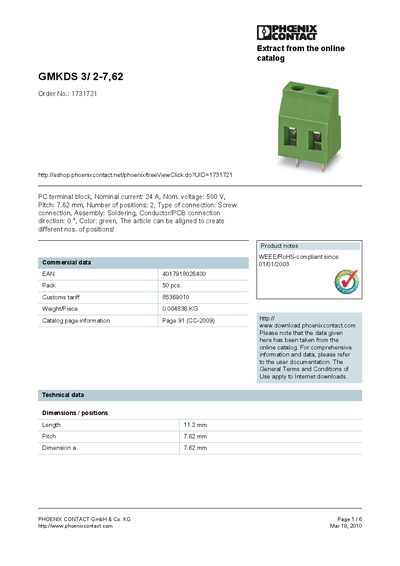
The GMKDS 3/2-7,62 terminal block from Phoenix Contact is a screw‑connection block rated for 24 A and 500 V. It features a 7.62 mm pitch, two positions, and can be assembled by soldering. The product notes include compliance with WEEE/RoHS and reference to the full user documentation for detailed information.
The leaflet also lists accessories such as a single cover, marker card, and screwdriver, and provides certification details (CCA, CSA, CUL, GL, GOST, SEV, UL). Technical specifications, dimensions, and ordering data are presented for quick reference.
| Nominal current | 24 A |
|---|---|
| Nominal voltage | 500 V |
| Pitch | 7.62 mm |
| Number of positions | 2 |
| Certifications | CCA, CSA, CUL, GL, GOST, SEV, UL |
It is rated for a nominal current of 24 A and a nominal voltage of 500 V.
It is certified according to CCA, CSA, CUL, GL, GOST, SEV, and UL.
Accessories include a single orange transparent cover, a self‑adhesive marker card, and a bladed screwdriver.