
Using elevated temperatures for the reverse-phase separation of peptides and proteins can increase column efficiency, change selectivity, and improve peak shape.
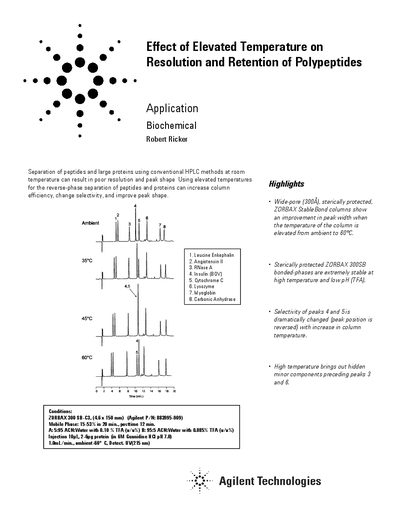
Separating peptides and large proteins via conventional HPLC at room temperature often yields poor resolution and peak shapes. This document explores the benefits of using elevated temperatures for reverse-phase separation, noting improvements in column efficiency, selectivity changes, and enhanced peak shape.
The study utilizes ZORBAX 300 SB-C18 columns (Agilent P/N: 883995-909) to demonstrate these effects. Key highlights include wider peaks at higher temperatures, dramatic shifts in selectivity for certain peptides, and the revelation of minor components that are hidden at ambient conditions.
| Column Part Number | 883995-909 |
|---|---|
| Mobile Phase A Composition | 5:95 ACN:Water with 0.10 % TFA |
| Mobile Phase B Composition | 95:5 ACN: Water with 0.085% TFA |
| Flow Rate | 1.0mL/min. |
| Detection Wavelength | UV(215 nm) |
Elevated temperatures can increase column efficiency, change selectivity, and improve peak shape.
Wide-pore ZORBAX StableBond columns show an improvement in peak width when the temperature is elevated from ambient to 60°C.
Yes, the selectivity of peaks can be dramatically changed with an increase in column temperature.
High temperature brings out hidden minor components that precede specific peaks.