
This document describes the analysis method for rhein and emodin in rhubarb root extract. The extract has a gentle laxative effect by stimulating the secretion of bile into the intestines and expelling toxic waste matter through the gall duct, thereby cleansing the liver and relieving chronic liver problems.
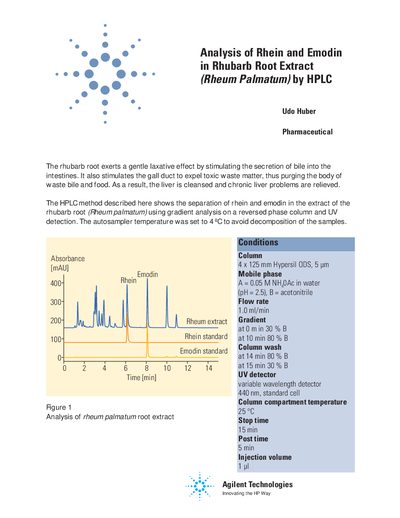
This document details a High-Performance Liquid Chromatography (HPLC) method for the separation and analysis of rhein and emodin in rhubarb root extract (Rheum palmatum). The method utilizes a reversed phase column and UV detection, with specific conditions for the mobile phase, flow rate, and gradient analysis to ensure precise results.
| Column | 4x 125 mm Hypersil ODS, 5 um |
|---|---|
| Mobile phase B | acetonitrile |
| Flow rate | 1.0 ml/min |
| Detection wavelength | variable wavelength detector 440 nm |
| Autosampler temperature | 4°C |
| Stop time | 15 min |
| Post time | 5 min |
The method uses an Agilent 1100 Series system including a quaternary pump, thermostatted autosampler, thermostatted column compartment, and variable wavelength detector.
The recommended column is Hypersil ODS, 5 um, 4x 125 mm, with part number 7992618-564.
The temperature is set to 4°C to avoid decomposition of the samples.