
This technical note highlights the importance of wear leveling, explains two primary wear- leveling techniques—static and dynamic—and calls attention to other considerations involved in implementing wear leveling.
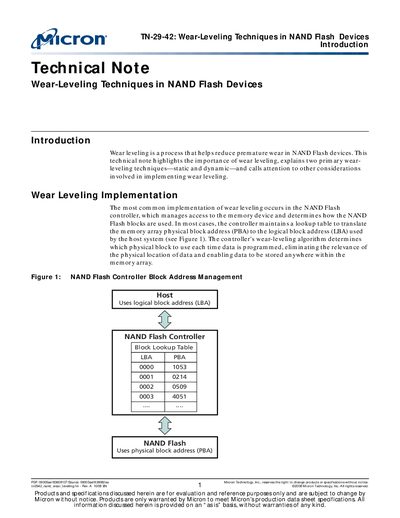
The note introduces wear‑leveling as a process that reduces premature wear in NAND flash devices. It describes how controllers use lookup tables to map logical to physical block addresses and how wear‑leveling algorithms select blocks with the lowest erase count.
It then details static and dynamic wear‑leveling methods, compares their advantages and disadvantages, discusses zoning considerations, and recommends using a single‑zone approach for maximum device life.
| Total blocks | 4,096 |
|---|---|
| Program/erase cycle count | 10,000 |
| Write rate example | 50 blocks every 10 minutes |
The two primary wear‑leveling techniques are static wear leveling and dynamic wear leveling.
Static wear leveling is the most effective method for maximizing device life.