
FDB86102LZ is an N-Channel PowerTrench® MOSFET with a drain-to-source voltage of 100V, a drain current of 30A, and a maximum on-state resistance of 24mΩ. It features fast switching speed and very low total gate charge and gate-drain charge compared to competing trench technologies. It is suitable for applications such as DC-DC conversion, inverters, and synchronous rectifiers.
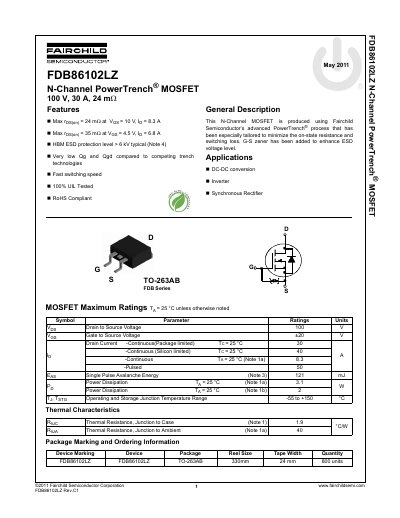
This document is a datasheet for the Fairchild Semiconductor FDB86102LZ, an N-Channel PowerTrench MOSFET rated for 100 V and 30 A. The device features a low on-state resistance of 24 mΩ at Vgs = 10 V and includes a G-S zener for enhanced ESD protection. It is packaged in a TO-263AB case and is RoHS compliant.
The datasheet provides comprehensive electrical characteristics, including off-state breakdown voltage, on-state resistance, threshold voltage, and switching times. It also presents typical performance graphs for capacitance, safe operating areas, and thermal response under various conditions.
| Drain to Source Voltage | 100 V |
|---|---|
| Continuous Drain Current (Package limited) | 30 A |
| Continuous Drain Current (Silicon limited) | 40 A |
| Package Type | TO-263AB |
| Operating Junction Temperature Range | -55 to +150 °C |
Yes, the document states that the device is RoHS Compliant.
The maximum single pulse avalanche energy is 121 mJ.