
MT48LC128M4A2, MT48LC64M8A2 and MT48LC32M16A2 are Micron 512Mb SDRAM series products, supporting PC100- and PC133-compliant, support multiple refresh modes, LVTTL-compatible inputs and outputs, power supply is +3.3V ±0.3V
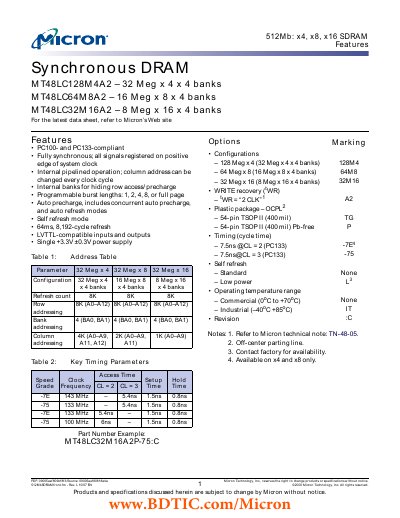
The MT48LC128M4A2 is a 512 Mb synchronous DRAM offered in x4, x8, and x16 configurations. It features a fully synchronous interface with all signals registered on the positive edge of the system clock and supports programmable burst lengths of 1, 2, 4, 8, or a full page.
Key features include auto‑precharge, self‑refresh (64 ms, 8,192‑cycle), LVTTL‑compatible I/O, and operation at a single 3.3 V supply. The device is supplied in a 54‑pin TSOP II (400 mil) plastic package and is available for both commercial (0 °C to +70 °C) and industrial (40 °C to +85 °C) temperature ranges.
| Capacity | 512 Mb (64 MByte) |
|---|---|
| Organization | x4, x8, x16 |
| Operating Voltage | 3.3 V |
| Burst Lengths | 1, 2, 4, 8, full page |
| CAS Latency | CL = 2 or CL = 3 |
| Package | 54‑pin TSOP II (400 mil) |
| Temperature Range (Commercial) | 0 °C to +70 °C |
| Temperature Range (Industrial) | 40 °C to +85 °C |
| Refresh Count | 8 K |
The device operates at a single 3.3 V supply.
It is supplied in a 54‑pin TSOP II (400 mil) plastic package.
The SDRAM supports programmable burst lengths of 1, 2, 4, 8, or a full page.