
This Application Note describes the analysis of milk by on-chip electrophoresis with the Agilent Protein 80 kit and the Agilent 2100 Bioanalyzer. Advantages of this method for milk protein analysis in comparison to conventional SDS-PAGE include: • Fast, reproducible and robust all in one method, replacing gel electrophoresis, staining and densitometric analysis • Easy sample comparison by electropherogram overlay for protein assignment within a chip or in between chips • Automated quantitative analysis for individual protein components
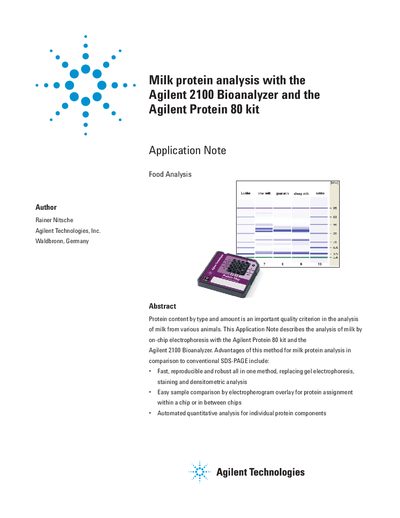
This document details a method for analyzing milk protein content by type and amount using the Agilent 2100 Bioanalyzer equipped with the Protein 80 kit. The technique utilizes on-chip electrophoresis to separate proteins such as caseins and whey proteins, offering advantages over conventional SDS-PAGE methods including speed, reproducibility, and automated quantitative analysis via the 2100 Expert software.
The note demonstrates the system's ability to distinguish between cow, goat, and sheep milk based on their unique protein patterns. It highlights how specific peaks correspond to major proteins like alpha-casein and kappa-casein in cow milk versus beta-casein dominance in goat and sheep milk, facilitating fast incoming inspection and fraud detection.
| Total protein content (Cow milk) | approximately 33 g/L |
|---|---|
| Casein percentage in cow milk | approximately 80% |
| Whey protein percentage in cow milk | remaining 20% |
| Analysis time per sample | less than 40 minutes |
The method is fast, reproducible, robust, and replaces gel electrophoresis, staining, and densitometric analysis.
Yes, the electrophoretic pattern derived from each species shows a significantly different protein pattern.
The Agilent 2100 Expert software automatically determines molecular weight, concentration, and percentage of total for individual proteins.