
This document presents the LC/MS/MS determination method for vitamin D in food. It describes the importance of vitamin D in regulating calcium and phosphate levels in the body and promoting healthy bone development. It also discusses the sources of vitamin D, including sunlight exposure and various food sources.
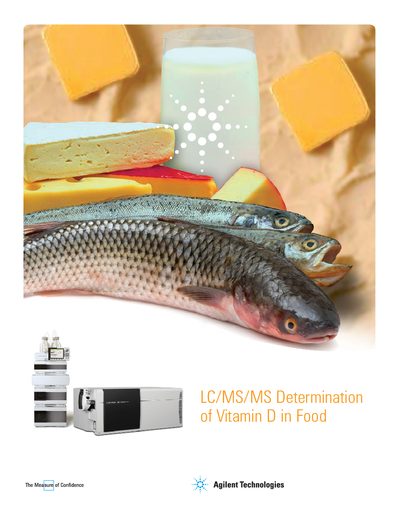
Vitamin D is an essential fat-soluble vitamin that must be converted by the liver and kidneys to be biologically active. Deficiency can lead to rickets in children and osteomalacia in adults. While sunlight is a major source, diet also plays a crucial role, with fatty fish, liver, eggs, and dairy products being naturally rich sources. Manufacturers often fortify foods with Vitamin D2 or D3 to meet dietary requirements, necessitating accurate monitoring of concentrations to prevent toxicity.
| Column | Agilent Eclipse PAH (PN 959741-918), 2.1 x 60 mm, 1.8 µm |
|---|---|
| Flow rate | 0.4 mL/min |
| Gas Temperature | 200 °C |
| Sheath Gas Temperature | 400 °C |
| Neubulizer Pressure | 45 psi |
| LOD | 0.1 ppb |
| Linearity Range | 0.1 — 250 ppb |
| Correlation Coefficient | >0.999 |
The method uses Agilent LC/MS/MS, specifically the 6460 QQQ.
The Agilent Eclipse PAH column (PN 959741-918) is recommended.
The method is suitable for milk, milk powder, dairy products, fish, spreads, and supplements.