
CK Series is a CHIP TYPE, WIDE TEMPERATURE RANGE ceramic capacitor with a working temperature range of -55 ~ +105°C, rated working voltage of 4 ~ 50V, rated capacitance of 4 ~ 50uF, and rated voltage of 4 ~ 50V. The leakage current is 3μA and the service life is 1000~2000 hours.
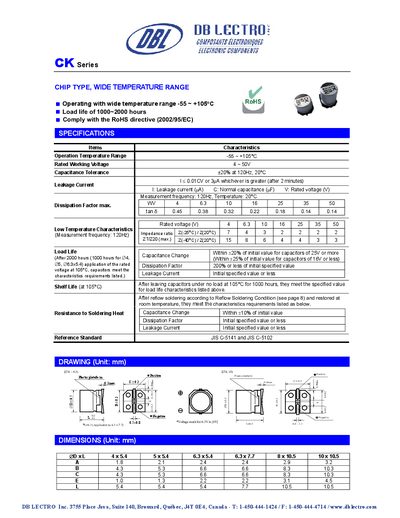
The CK Series from DB LECTRO are aluminum electrolytic chip‑type capacitors intended for applications requiring a broad operating temperature range and RoHS compliance. The document provides specifications, dimensions, part‑number explanations, and handling guidelines for designers and manufacturers.
Key information includes temperature limits, voltage ratings, capacitance tolerances, ripple‑current capabilities, and recommended mounting and soldering practices. The datasheet also outlines RoHS compliance, reliability testing, and life‑expectancy calculations for the capacitors.
| Operation Temperature Range | -55 ~ +105°C |
|---|---|
| Rated Working Voltage | 4~50V |
| Capacitance Tolerance | +20% at 120Hz, 20°C |
| Load Life | 2000 h at 105 °C (1000 h for 24 V) |
The capacitors operate from –55 °C up to +105 °C.
Yes, they comply with the RoHS directive (2002/95/EC).
The rated working voltage is 4 V to 50 V.