
This document introduces the HPLC analysis method of H2-antagonist drugs.
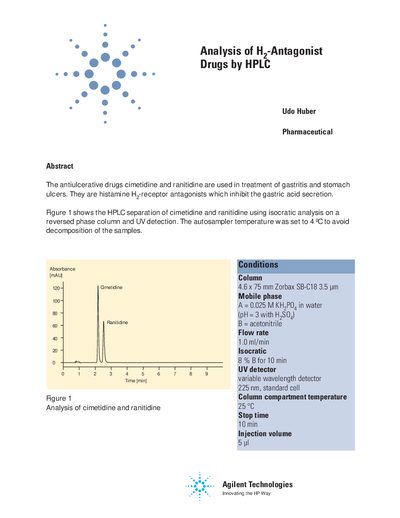
The document presents a High-Performance Liquid Chromatography (HPLC) method developed by Udo Huber, an application chemist at Agilent Technologies. The method is designed for the separation and analysis of cimetidine and ranitidine, which are histamine H2-receptor antagonists used to treat gastritis and stomach ulcers.
The procedure utilizes a Zorbax SB-C18 column with UV detection at 225 nm. Key conditions include an autosampler temperature of 4°C to prevent sample decomposition and a flow rate of 1.0 ml/min. The document details the specific mobile phase composition, column dimensions, and equipment setup required for reliable analysis.
The autosampler temperature should be set to 4°C to avoid decomposition of the samples.
The injection volume must be 5 ul for this analysis.