
This report describes the analysis of chlorinated pesticides and PCBs using the HP-608 capillary column. The methods are EPA 608, 8080, 8081, and CLP pesticides, which are used to evaluate wastewater and solid wastes. The benefits of splitless and on-column injection techniques using the Agilent 5890 Series II GC with EPC are compared.
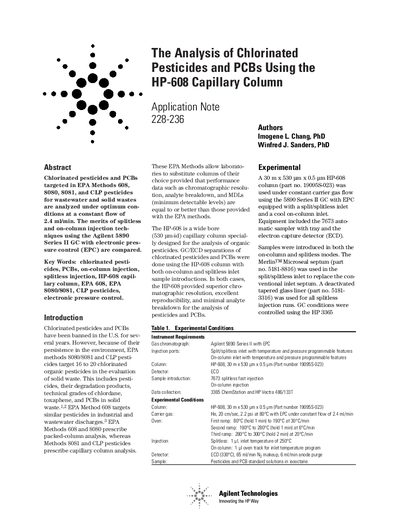
The document describes an application note evaluating the performance of the Agilent HP-608 wide bore capillary column for analyzing chlorinated pesticides and PCBs as targeted in EPA Methods 608, 8080, 8081, and CLP. The study compares splitless and on-column injection techniques using an Agilent 5890 Series II GC with electronic pressure control (EPC) and an electron capture detector (ECD).
The analysis uses a constant carrier gas flow of 2.4 ml/min.
The analysis is completed in less than 17 minutes.
The RSD for all 16 EPA targeted pesticides was less than 2%.