
This manual introduces the operation and maintenance instructions of 6505™ Tube Guitar Amplifier
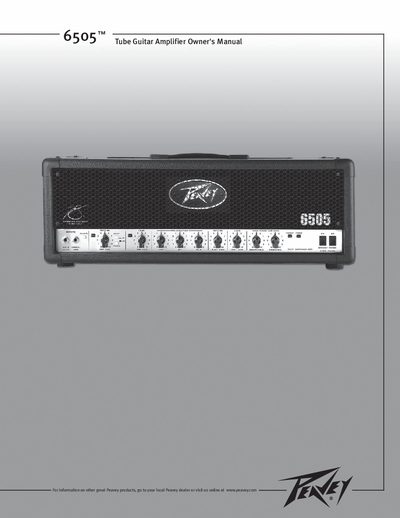
This manual begins with extensive safety instructions, warning about dangerous voltages, proper grounding, and protection against moisture. It also includes multilingual safety symbols and cautions for users and service technicians.
The remainder of the guide describes the amplifier’s features and controls: power output, tube complement, input options, channel selection, EQ sections, resonance and presence controls, and the footswitchable effects loop. Detailed diagrams explain the high‑gain and normal‑gain inputs, rhythm and lead channel gain stages, and the function of bright, crunch, and pre/post gain switches.
| Power Output | 120 W RMS into 16 Ω, 8 Ω, or 4 Ω (switchable) |
|---|---|
| Preamp Tubes | Five 12AX7 |
| Power Tubes | Four 6L6GC |
| Channels | Two selectable channels (Rhythm and Lead) |
| EQ | Three‑band passive EQ (Low, Mid, High) |
| Effects Loop | Switchable post‑EQ effects loop |
| Preamp Output | Available on front panel |
It delivers 120 W RMS into 16 Ω, 8 Ω, or 4 Ω, selectable via the output impedance switch.
The amp uses five 12AX7 tubes in the preamp stage and four 6L6GC tubes in the power stage.
By activating the Crunch Switch, the rhythm channel becomes a second lead channel with higher gain.