
This document introduces the energy regeneration characteristics of motors and the problem of installing an external resistor when the motor generates too much energy.
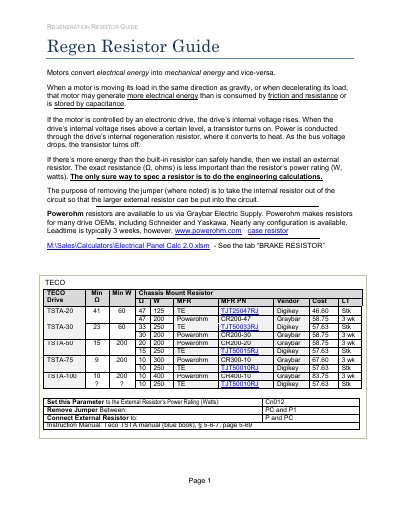
This guide explains how motors generate excess electrical energy during deceleration or gravity-assisted motion, which is dissipated as heat through internal or external regeneration resistors. It provides detailed specifications for TSTA series resistors, including power ratings, manufacturer part numbers, and vendor information. Installation instructions are included for connecting external resistors and adjusting drive parameters.
The guide also covers regeneration resistor configurations for other drive brands like Yaskawa, Mitsubishi, and Delta, with specific parameter settings and wiring instructions for each.
| Minimum Voltage | TSTA -20: 41V, TSTA -30: 23V, TSTA -50: 15V, TSTA -75: 9V, TSTA -100: 10V |
|---|---|
| Power Rating | TSTA -20: 60W, TSTA -30: 60W, TSTA -50: 200W, TSTA -75: 200W, TSTA -100: 200W |
| Resistor Manufacturer | Powerohm, Digikey, Graybar |
| Lead Time | Typically 3 weeks |
Remove the jumper between PC and P1, then connect the external resistor between P and PC. Set the drive parameter to the external resistor’s power rating (Watts).
It converts excess electrical energy from the motor into heat when the drive’s internal voltage rises above a certain level.
Powerohm, Digikey, and Graybar are listed as suppliers with part numbers and costs provided.