
This document describes a technique for analyzing epoxy resins. Epoxy resins are high-molecular-weight materials used to manufacture oil- and fuel-resistant plastics. The technique uses gel permeation chromatography to analyze epoxy resins. The technique can measure the molecular weight of epoxy resins, which is important for ensuring the quality of epoxy resins.
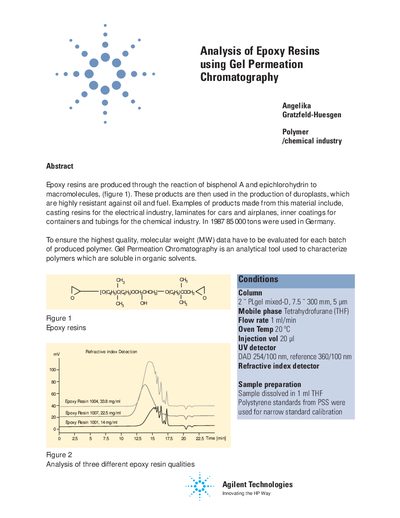
This document details a method for analyzing epoxy resins produced from bisphenol A and epichlorohydrin. The procedure utilizes Gel Permeation Chromatography (GPC) to characterize molecular weight data, which is essential for ensuring quality in the production of duroplasts used in electrical, automotive, and chemical industries.
The recommended equipment includes an Agilent 1100 Series system with a diode array detector or HP 1047A refractive index detector. The method specifies using Polystyrene standards from PSS for calibration and Tetrahydrofuran (THF) as the mobile phase.
It is an analytical tool used to characterize polymers which are soluble in organic solvents.
The specified flow rate is 1 ml/min.
The relative standard deviation (rsd) of Mw was found to be 0.66% over 10 consecutive runs.