
Hammond XPK-130G XPK-200G XPK-200GL MIDI Sound Pedalboard User Manual

This manual introduces the usage of Hammond MIDI sound pedalboard, including names and functions, mounting the expression pedal, making the connections, using the internal sound generator, MIDI channel, advanced operation, etc
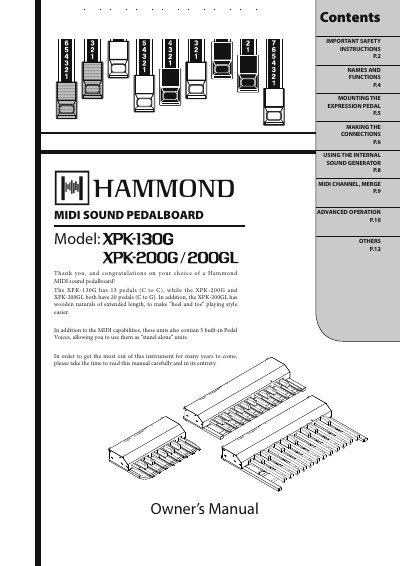

Hammond XPK-130G XPK-200G XPK-200GL MIDI Sound Pedalboard User Manual - cover page
Brand
Hammond
Document type
User Manual
Language
English
Pages
14
File format
PDF
File size
1.2 MB
Published
18 October, 2023
Updated
18 October, 2023
MD5 checksum
EEFC3340380CB46E045D117CC1F79B31

About this manual

This manual covers the Hammond MIDI sound pedalboards XPK-130G, XPK-200G, and XPK-200GL. It includes safety precautions, pedal functions, and instructions for mounting optional expression pedals. The pedalboards feature built-in sounds and MIDI connectivity for versatile use. The XPK-200GL includes extended wooden naturals for heel-and-toe playing.

What's inside

  • IMPORTANT SAFETY INSTRUCTIONS
  • NAMES AND FUNCTIONS
  • MOUNTING THE EXPRESSION PEDAL
  • MAKING THE CONNECTIONS
  • USING THE INTERNAL SOUND GENERATOR
  • MIDI CHANNEL, MERGE
  • ADVANCED OPERATION
  • OTHERS

Frequently asked questions

What are the pedal counts for the XPK-130G and XPK-200G/XPK-200GL models?

The XPK-130G has 13 pedals (C to C), while the XPK-200G and XPK-200GL both have 20 pedals (C to G).

What does the XPK-200GL model include that the other models do not?

The XPK-200GL has wooden naturals of extended length, to make “heel and toe” playing style easier.

What are the built-in features of the Hammond MIDI sound pedalboard?

These units contain 5 built-in Pedal Voices, allowing you to use them as “stand-alone” units.

What is the purpose of the RELEASE knob?

Allows you to adjust the rate at which notes decrease to silence after key release.

Download PDF (1.2 MB)

More Hammond Manuals


View all Hammond manuals →