
This manual describes the use of the ExStik RE300 water ORP meter. The RE300 is a portable, waterproof ORP meter that can be used to measure the dissolved oxygen content of water.
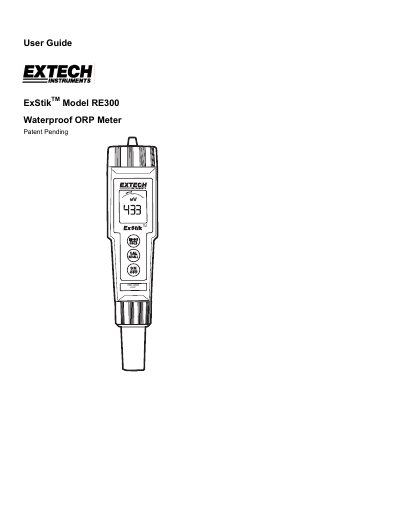
This guide explains how to operate the ExStik RE300 Waterproof ORP Meter, including turning it on, taking measurements, storing readings, and replacing batteries. It also covers electrode replacement and auto power-off features. The meter displays ORP in mV with a bargraph and can store up to 15 readings.
The device uses four CR2032 batteries and includes a low battery indicator. It operates between 0 to 50°C and features automatic calibration upon startup. Stored readings can be recalled using the CAL and MODE buttons.
| Display | Multifunction LCD with Bargraph |
|---|---|
| Operating Conditions | 32 to 122°F (0 to 50°C) / < 80% RH |
| ORP Range / Accuracy | ± 999mV / ± 4mV |
| Measurement Storage | 15 tagged (numbered) readings |
| Power | Four (4) CR2032 button batteries |
| Auto Power Off | After 10 minutes of inactivity |
Press the ON/OFF button to turn the RE300 on. It enters Automatic Calibration mode.
Press the MODE button to store a reading. The LCD will display the memory location number and the value stored.
Any stored readings will be discarded, but factory calibration data will be retained.