
NTN Bearing Unit Handbook, introduces the structure and features of NTN bearing units, including steel, stainless steel, plastic bearing units, as well as NTN bearing units' unique features
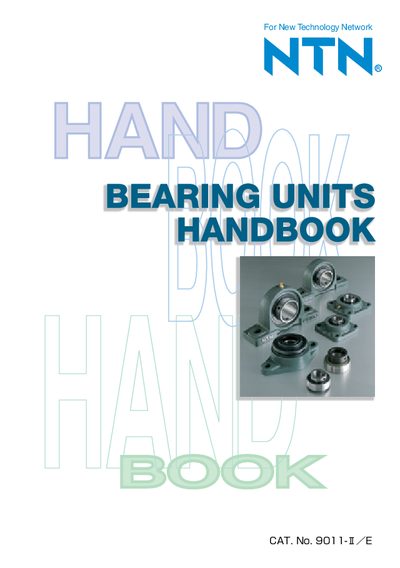
This NTN Bearing Units Handbook describes NTN bearing units, which are double sealed ball bearings installed in special housings. It covers construction, features, part numbering, grease specifications, installation, handling, and technical data for the units.
The handbook includes stainless steel, ductile, steel, and plastic series bearing units, as well as special application units such as water-cooled, air-cooled, and flanged types. It also provides compatibility tables with other manufacturers and allowable speed charts.
| Housing material | Cast iron or steel plate |
|---|---|
| Standard housing | Cast iron |
| Basic dynamic rated load (UCP205) | 14 000 N |
It is essentially a double sealed ball bearing installed in a special housing.
NTN's unique ball point set screw provides a reliable lock even when exposed to vibration or shock loads.
Provide a water drain hole (5 to 8 mm) at the lower side of the cover.