
This is an introduction document about Dutch Elm Disease
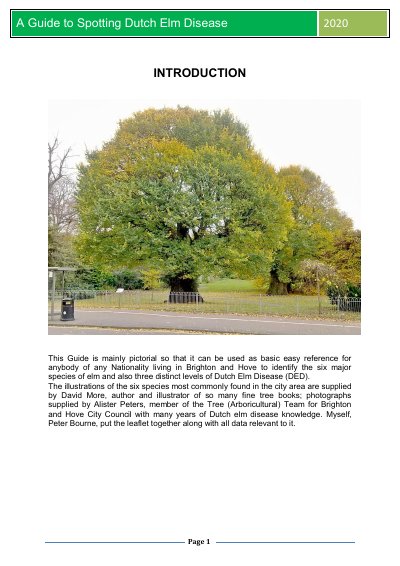
This guide is mainly pictorial so it can be used as a basic easy reference for anybody living in Brighton and Hove to identify the six major species of elm and three distinct levels of Dutch Elm Disease. Illustrations are supplied by David More, photographs by Alister Peters, and the leaflet was put together by Peter Bourne.
It describes the first, second and third stages of infection, including yellowing and dead foliage, ring barking to prevent spread to neighbouring elms, and removal of infected trees. It also advises the public to inform the city council if they have elm logs and not to report trees already marked by the City Council Tree team.
It means removal of the bark and cambium to prevent the disease spreading to the roots.
Red areas showing the typical dieback of the disease entering on the tips of branches, usually caused by the feeding of Elm Bark Beetles.
No. These trees are already known to the City Council Tree team and will be removed as soon as possible.
They are strongly advised to inform the city council, and the elm logs will be removed by the Tree team.