
Danfoss Eco™ Electronic Radiator Thermostat Installation Guide
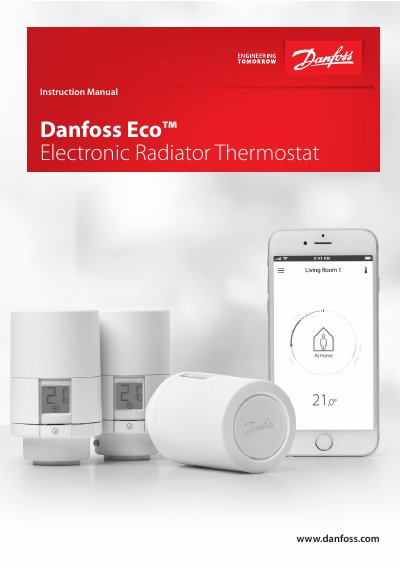
This guide walks you through installing the Danfoss VILTH302 thermostat, selecting the correct valve adapter, inserting batteries, mounting the device, and pairing it with the Danfoss Eco™ app. It also covers setting temperature schedules, vacation modes, and advanced settings via the app. The thermostat automatically adjusts to your heating system during the first week of operation.
Technical specifications include a 2.4 GHz wireless connection, 2-year battery life, and an LCD display with white backlight. Safety and environmental ratings are provided, including IP20 protection and a temperature range of 0–40°C.
| Thermostat Type | Programmable electronic radiator valve controller |
|---|---|
| Power Supply | 2 x 1.5 V alkaline AA batteries (not included) |
| Battery Life | Up to 2 years |
| Ambient Temperature Range | 0 to 40 °C |
| Maximum Water Temperature | 90 °C |
| Temperature Setting Range | 4 to 28 °C |
| Display | LCD with white backlight |
| Transmission Frequency | 2,4 GHz |
| IP Class | 20 |
Replacing batteries causes the time and date settings to be lost. Reconnect to the app to restore them; otherwise, the thermostat remains in manual mode.
Yes, the display can be rotated 180° to be read from both horizontal and vertical mounting positions.