
STMicroelectronics AN1826 Transient Protection Solutions Application Note

This application note describes the differences in the characteristics of Transil® diodes and Varistor used for transient protection.
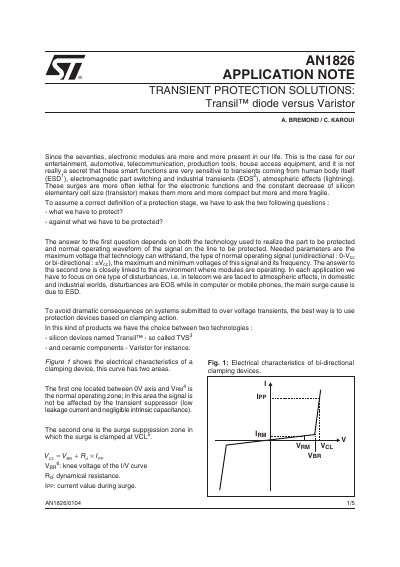

STMicroelectronics AN1826 Transient Protection Solutions Application Note - cover page
Brand
STMicroelectronics
Category
Other Electronics
Document type
Application Note
Language
English
Pages
5
File format
PDF
File size
59 KB
Published
06 August, 2012
Updated
30 September, 2023
MD5 checksum
EEA242A43B634FDB1C34FDA39FDEE009

About this manual

This document compares two technologies for transient protection in electronic modules: Transil diodes and ceramic varistors. It discusses the sensitivity of electronic functions to transients such as ESD, EOS, and lightning, and defines the parameters needed for a correct protection stage definition. The text analyzes the electrical characteristics of both devices, including their clamping behavior in normal operating and surge suppression zones.

What's inside

  • Transient Protection Solutions
  • Transil diode versus Varistor
  • Electrical characteristics
  • EOS and ESD test conditions
  • Clamping factor comparison
  • System reliability and ageing
  • USB link protection circuit

Frequently asked questions

What are the two main technologies compared for transient protection?

The document compares silicon devices named Transil diodes and ceramic components known as Varistors.

How do Transil diodes and Varistors differ in terms of directionality?

Varistors operate uniquely in bi-directional mode, whereas Transil diodes can be used in both uni-directional and bi-directional modes.

Which device shows better performance regarding ageing phenomena?

Transil diodes show no ageing phenomena regarding ESD events, while Varistors are subjected to it.

Download PDF (59 KB)

More STMicroelectronics Manuals


View all STMicroelectronics manuals →