
Agilent K.29 Multi-detector Configurations and Applications of Differential Flow Modulation GCxGC

This document introduces the enhanced separation power of GC x GC, which can be combined with selective and non-selective detectors to provide enhanced sample information and confirmation that would otherwise not be possible in a single run.
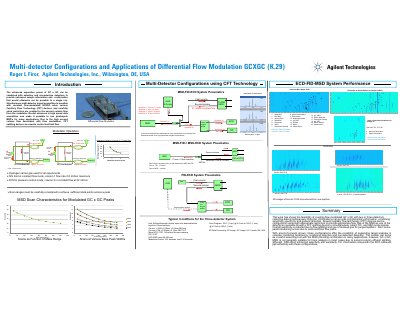

Agilent K.29 Multi-detector Configurations and Applications of Differential Flow Modulation GCxGC - cover page
Brand
Agilent
Category
Other Electronics
Document type
Application Note
Language
English
Pages
1
File format
PDF
File size
129 KB
Published
05 July, 2012
Updated
30 September, 2023
MD5 checksum
21E7990C10D88DED8940CD6AAFDBAE2B

About this manual

The document details how the enhanced separation power of GCxGC can be combined with selective and non-selective detectors to provide enhanced sample information and confirmation. It explains that simultaneous multi-detector signal acquisition is possible with constant flow-modulated GCxGC when various Capillary Flow Technology (CFT) devices and carefully sized restrictors are coupled to the second column flow from the modulator.

What's inside

  • Multi-Detector Configurations
  • MSD-FID-ECD System Pneumatics
  • Modulator Operation
  • MSD-FID // MSD-ECD System
  • FID-ECD System Pneumatics
  • Three-detector System Conditions
  • System Performance
  • Summary

Frequently asked questions

What carrier gas is used for all experiments described in this note?

Hydrogen is the carrier gas used for all experiments.

What are the maximum flow rate limits for column 1 and column 2 in constant flow mode?

Column 1 has a maximum flow rate of 0.8 ml/min, while column 2 runs at a constant flow of 22 ml/min.

Download PDF (129 KB)

More Agilent Manuals


View all Agilent manuals →