
ABB drives are used in the cement industry to reduce energy consumption and optimize process control. By reducing energy consumption, increasing equipment availability, reducing downtime, and lowering maintenance costs, it is possible to increase production output, improve product quality, and reduce energy costs and CO2 emissions.
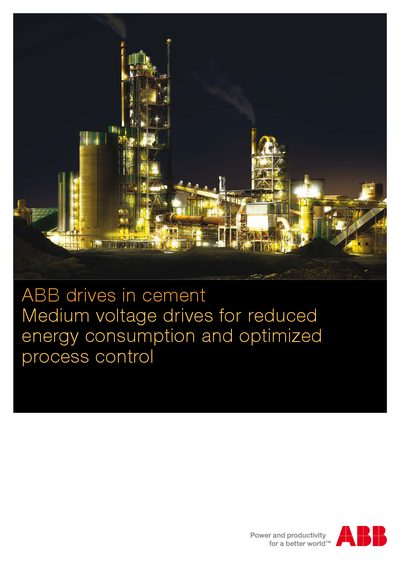
The leaflet explains how ABB’s medium‑voltage variable speed drives (VSDs) help cement producers lower energy consumption, increase equipment availability and cut maintenance costs. It highlights the harsh operating conditions in cement plants and the need for reliable, efficient drive technology.
Key sections cover the benefits of VSDs, energy‑saving potential, typical applications such as fans, mills and kilns, and ABB’s testing, service and support programmes, including training and lifecycle management.
| Drive model | ACS 2000 |
|---|---|
| Rated power | 550 kW |
| Speed control range | 0 to 1,000 rpm |
| Drive type | Medium voltage variable speed drive |
VSDs adjust fan speed, and because power is proportional to the cube of speed, a small speed reduction leads to a large energy saving.
ABB states that VSDs lower energy consumption and CO₂ emissions, minimize mechanical wear, improve process quality and efficiency, increase productivity, and reduce the need for network compensation devices.
ABB performs routine and functional tests, combined system tests, and offers installation, commissioning, training, spare parts, and lifecycle management to ensure reliability and reduce life‑cycle costs.