
Instructions for using the DK607-01 kit to extract circulating cell‑free DNA from plasma samples.
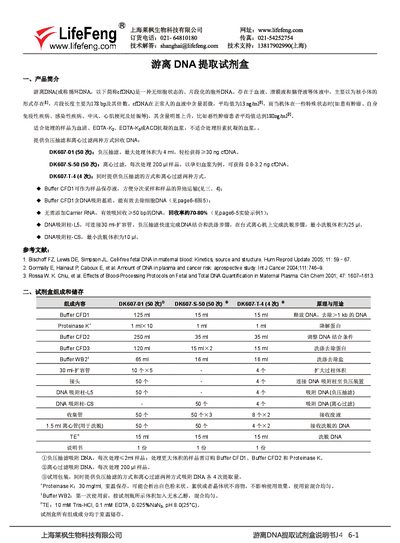
The DK607-01 kit provides two extraction methods—vacuum filtration and centrifuge filtration—to recover cfDNA from serum, EDTA‑K2, EDTA‑K3 or ACD‑anticoagulated plasma. The kit includes buffers, Proteinase K, DNA adsorption columns, and collection tubes, and is suitable for clinical research and molecular biology experiments.
The manual details sample preparation, plasma separation, safety precautions, step‑by‑step protocols for processing 200 µl and 1‑4 ml samples, and guidance on cfDNA detection and troubleshooting. This manual is written in Chinese.
| Maximum processing volume (vacuum filtration) | 4 ml |
|---|---|
| Typical cfDNA yield (vacuum filtration) | ≥30 ng per run |
| Centrifuge filtration sample volume | 200 µl per run |
| Typical cfDNA yield (centrifuge filtration) | 0.8‑3.2 ng per run |
| Number of uses (DK607‑01) | 50 |
| Number of uses (DK607‑S‑50) | 50 |
| Number of uses (DK607‑T‑4) | 4 |
| Minimum elution volume (L5 column) | 25 µl |
| Minimum elution volume (CS column) | 10 µl |
| Storage temperature – short term | 15‑25 °C for 3 days |
| Storage temperature – refrigerated | 2‑8 °C for 2 weeks |
| Storage temperature – long term | -20 °C |
The vacuum pump must generate a pressure lower than 70 kPa; check the pump, tubing and seals for leaks.
Insufficient suspension of Buffer CFD1 or exceeding the column’s DNA‑binding capacity (≈1 µg per ml) leads to genomic DNA remaining.