
This manual introduces the usage of blood pressure monitor CH-650, including product features, usage methods, precautions, fault handling and other contents.
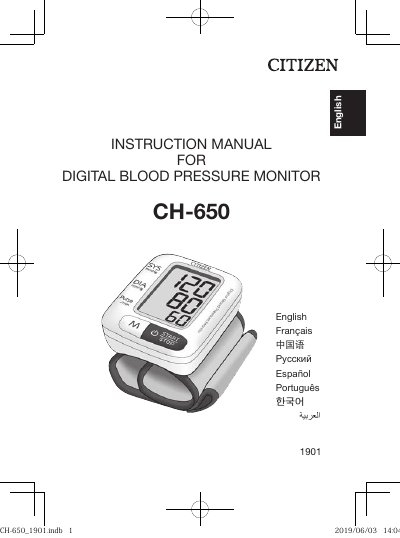
This is the instruction manual for the Citizen CH-650 digital blood pressure monitor, a wrist-worn unit that measures systolic blood pressure, diastolic blood pressure and pulse rate automatically by the oscillometric method. The manual explains that the device is meant for checking personal health condition at home under the direction of a physician and is not a diagnostic device. The printed manual carries the same content in several languages, with the English section placed first.
The English section starts with general remarks on blood pressure and correct measurement conditions, then gives precautions for use and maintenance, identifies the parts, and describes loading and removing the batteries, wrapping the wrist cuff and obtaining accurate measurements. It continues with the measurement procedure, calling up data stored in memory, error indications, background information and questions and answers about blood pressure, what to do before requesting repairs or testing, and specifications. It closes with a two-year inspection recommendation, disposal notes under the WEEE directive and the European standards the device corresponds to.
| Cuff wrist circumference | 13.5-21.5 cm |
|---|---|
| Measurement method | Oscillometric, noninvasive |
| Measured values | Systolic blood pressure (SYS), diastolic blood pressure (DIA), pulse rate |
| Batteries | 2 AAA batteries |
| Reference European standards | EN60601-1, EN1060-1, EN1060-3, EN1060-4 |
| Storage temperature limits | Not above 60°C, not below -20°C |
| Recommended inspection interval | Every two years |
It is intended for checking personal health condition at home under the direction of a physician, and it is not intended to be a diagnostic device.
The attached cuff is suitable for wrist circumferences of 13.5-21.5 cm.
Allow an interval of about 1 minute between measurements, because frequently repeated measurements will not give accurate results.
It is generally recommended that the monitor be inspected every two years to ensure proper function and performance.