
This handbook aims to raise awareness of the importance of migration for food security and rural development through fun activities. The focus is on how FAO is helping people to stay safely at home, and the links between migration and the global Zero Hunger goal.
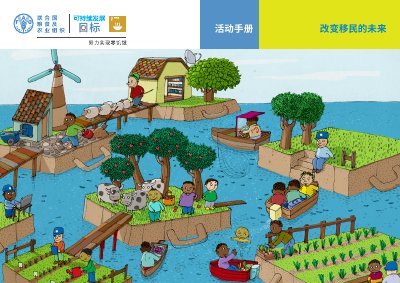
This activity booklet from FAO (the Food and Agriculture Organization of the United Nations, © FAO 2018, ISBN 978-92-5-130613-0) introduces migration and migrants. It explains what migration is, the difference between international and internal migration, the challenges and benefits migration brings, and why people sometimes feel migration is their only choice.
Separate sections look at hunger and poverty, climate change and conflict, and describe how FAO helps people who want to stay at home, or rebuild their homes after disasters or conflict. The booklet is designed as an activity book, with coloring tasks and references to other FAO activity booklets. This manual is written in Chinese.
The text estimates about 258 million international migrants and about 760 million internal migrants.
More than 19 million people migrated because of natural disasters in 2015.
It is a way of farming and growing crops sustainably that does not damage the valuable nutrients in the soil and limits greenhouse gas emissions.
It states that the world has 2.1 billion poor people and more than 800 million hungry people, most of whom live in rural areas.