
This publication provides an overview of a sustainable aquaculture system for the aquaculture industry, which can help farmers reduce carbon emissions and provide consumers with healthier products. The publication introduces new emerging recirculating aquaculture systems that can increase production and reduce the impact of aquaculture activities on the environment.
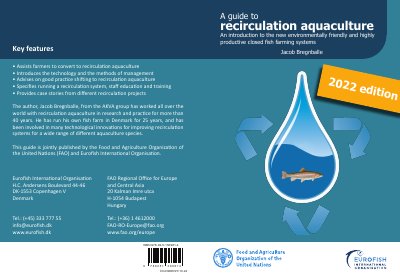
This guide introduces recirculation aquaculture, a technology for farming fish and other aquatic organisms by reusing water through mechanical and biological filters. It is aimed at people working in fish farming and covers conversion from traditional methods, system operation, staff training, and good practice.
Jointly published by FAO and Eurofish International Organisation, the 2022 edition is written by Jacob Bregnballe of AKVA group, who has over 40 years of experience in recirculation aquaculture. It includes case stories from different recirculation projects and chapters on system design, fish species, project planning, wastewater treatment, and disease.
It is jointly published by the Food and Agriculture Organization of the United Nations (FAO) and Eurofish International Organisation.
Jacob Bregnballe from AKVA group wrote the guide; he has worked with recirculation aquaculture for more than 40 years.
It is a technology for farming fish or other aquatic organisms by reusing water in production, based on mechanical and biological filters.
Intensive systems can use as little as 300 L of new water per kilogram of fish produced.