
Field Guide for Managing Siberian Elm in the Southwest Forest Service

The document is a field guide published by the United States Department of Agriculture on how to manage Siberian Elm
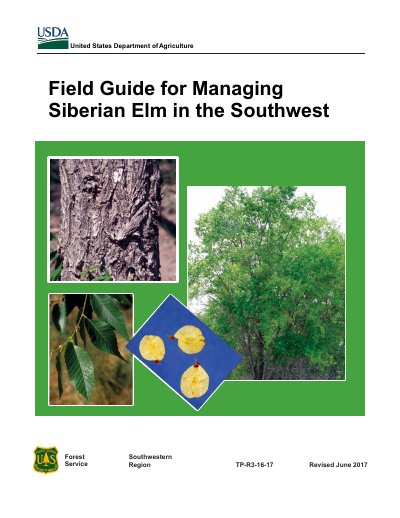

Field Guide for Managing Siberian Elm in the Southwest Forest Service - cover page
Document type
Other
Language
English
Pages
11
File format
PDF
File size
839 KB
Published
21 October, 2023
Updated
21 October, 2023
MD5 checksum
8373324D2C7FEC9D9E0A148FB13103B6

About this manual

This document serves as a field guide for the U.S. Forest Service's Southwestern Region, offering recommendations for managing Siberian elm (Ulmus pumila L.) in forests, woodlands, and rangelands. It covers the tree's description, growth characteristics, ecological impacts, and distribution in states like Arizona and New Mexico.

What's inside

  • Description
  • Growth Characteristics
  • Ecology Impacts/Threats
  • Site/Distribution
  • Spread
  • Invasive Features
  • Management
  • Physical Control
  • Manual Methods
  • Mechanical Methods

Frequently asked questions

What is the primary method for controlling Siberian elm?

Combine mechanical and chemical methods for most effective control.

What is the recommended treatment for newly emerged Siberian elm seedlings?

They are easily removed by hand pulling or hoeing.

How long should girdled Siberian elm trees be left in place after treatment?

Leave them in place for 2 to 3 years.

Download PDF (839 KB)

Also Manuals