
This is a combustible gas leak detector. It can detect natural gas, propane, gas, combustible gas leaks.
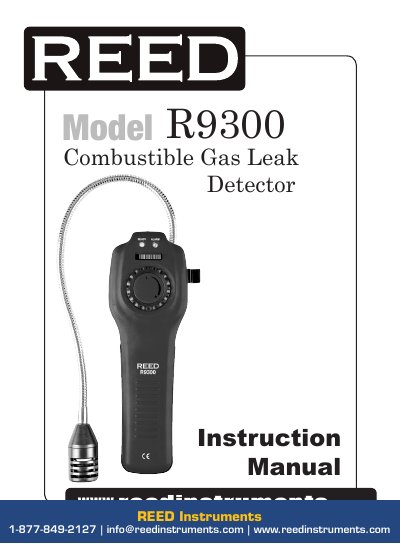
The REED Instruments R9300 is a handheld combustible gas leak detector designed for one-handed operation. It features a 16-inch gooseneck probe, a user-adjustable sensitivity wheel, and both audible and visual alarm indicators. The device detects a wide range of combustible gases, including methane, propane, and gasoline, using a heated semiconductor gas sensor.
| Detected Gases | Methane, Natural Gas, Benzene, Ethane, Propane, Butane, Acetone, Alcohol, Ammonia, Gasoline, Jet Fuel, Industrial Solvents, Lacquer, Paint Thinner, Naptha |
|---|---|
| Sensitivity | 50 ppm methane |
| Sensor Type | Heated semiconductor gas sensor |
| Alarm Limit | 10% LEL for Methane |
| Warm-up Time | Approx. 5 mins |
| Response Time | Less than 2 seconds |
| Power Supply | 3 "C" batteries |
| Battery Life | Approx. 8 hours |
| Probe Length | 16" (406mm) |
| Operating Temperature | 32 to 122°F (0 to 50°C) |
The instrument detects a wide range of combustible gases including gasoline, propane, natural gas, fuel oil, and various solvents.
The instrument runs through a one-minute warm-up and self-zeroing sequence when first turned on, though specifications list the warm-up time as approximately 5 minutes.
If the READY light is off, the batteries are low and should be replaced immediately to ensure reliability.
Yes, the tick rate (sensitivity) can be controlled using a rotary wheel in the center of the instrument.