
Simrad RS90 VHF Transceiver Operating Manual

This manual describes how to operate the Simrad RS90.
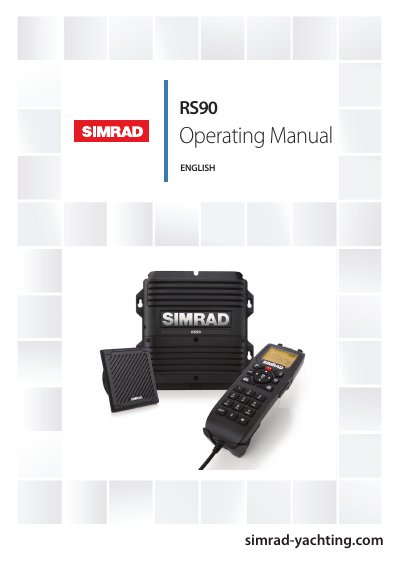

Simrad RS90 VHF Transceiver Operating Manual - cover page
Brand
Simrad
Category
Other Electronics
Document type
User Manual
Language
English
Pages
129
File format
PDF
File size
11.9 MB
Published
16 October, 2023
Updated
16 October, 2023
Model
RS90
MD5 checksum
F6B61FC87BB7A35E2B8CD62F706FF9F9

About this manual

This manual provides instructions for the Simrad RS90 VHF transceiver, a marine radio designed for digital maritime distress calls and general communication. It details the system overview, including the transceiver and compatible handsets, and explains how to switch the device on and off. The guide covers essential operating procedures such as changing channels, adjusting volume and squelch, and using the PTT key for transmission.

What's inside

  • System Overview
  • Getting Started
  • Handsets
  • Operating Procedures
  • Making a Routine Radio Call
  • Making a DSC Distress Call
  • Receiving Weather Alerts
  • Using the Hailer
  • Using the Fog Horn
  • MMSI and License Information

Frequently asked questions

What is the minimum required distance between the radio antenna and a person's body during operation?

The antenna must be operated with a minimum spacing of 96 cm between it and all parts of a person's body, excluding hands, wrists, and feet.

What is the approximate geographic range for using this radio as an effective safety device?

The radio must be used only within a range of approximately 20 nautical miles to function effectively as a safety device.

What is the minimum separation distance required between the HS35 handset and a user's face?

When using the HS35 handset, you must maintain a minimum separation of 1 inch (2.5 cm) from your face.

Download PDF (11.9 MB)

More Simrad Manuals


View all Simrad manuals →