
This document is the installation manual for the DCT1800 digital consumer terminal, which describes the graphical symbols and supplement warning marking locations on the bottom of the appliance. The symbol indicates the presence of dangerous voltage levels within the equipment, which are not insulated and may cause serious bodily injury when touched. The symbol may also appear on schematics. It draws attention to a critical procedure or refers to the instruction manual for opening or service information. Only qualified service personnel should install or service the equipment. The symbol may also appear in text and on schematics. WARNING: TO PREVENT FIRE OR SHOCK HAZARD, DO NOT EXPOSE THIS APPLIANCE TO RAIN OR MOISTURE. CAUTION: TO PREVENT ELECTRICAL SHOCK, DO NOT USE THIS PLUG WITH AN EXTENSION CORD, RECEPTACLE, OR OTHER OUTLET UNLESS THE BLADES CAN BE FULLY INSERTED TO PREVENT BLADE EXPOSURE. FCC Compliance: Federal Communications Commission Radio and Television Interface Statement for a Class ‘B’ Device This equipment has been tested and found to comply with the limits for a Class B digital device, pursuant to part 15 of the FCC Rules. These limits are designed to provide reasonable protection against harmful interference in the residential installation. This equipment generates, uses, and can radiate radio frequency energy and, if not installed and used in accordance with the instructions, may cause harmful interference to radio communications. However, there is no gua
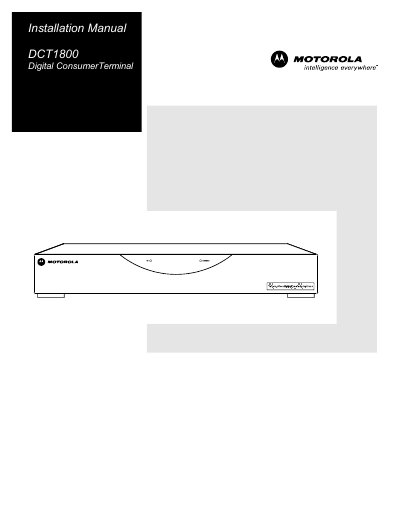
The Motorola DCT1800 is an analog/digital set-top box that supports 64 and 256 QAM digital signal formats. It features an integrated tuner covering 54 through 860 MHz and includes an integrated RF return using the built-in STARVUE II module. The device provides RF and baseband audio/video ports for connection to televisions and VCRs.
| Signal Formats | 64 and 256 QAM |
|---|---|
| Tuner Range | 54 through 860 MHz |
| RF Return | Integrated |
Call the Motorola Repair Facility at 1-800-227-0450 for a Return for Service Authorization (RSA) number before sending the unit.
The device must accept any interference received, including interference that may cause undesired operation.