
The NM2LC residual current operated circuit breaker is an integrated intelligent residual current action circuit breaker with residual current protection relay and plastic shell circuit breaker. It has functions of overload protection, short circuit protection, overvoltage protection, undervoltage protection, phase loss protection, etc. It is suitable for low-voltage power distribution networks with direct grounding of the neutral point on the low-voltage side of the distribution transformer, providing indirect contact protection and protection against various faults in the line or electrical equipment.
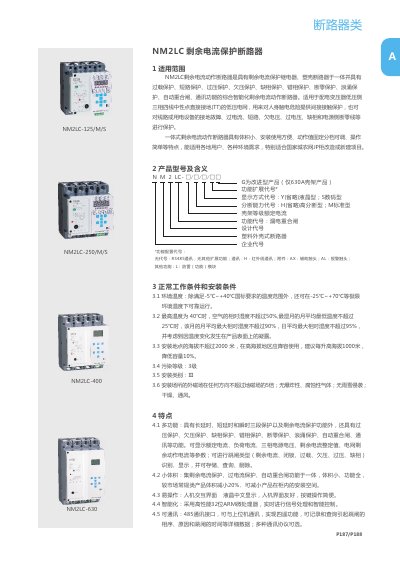
The Chint NM2LC is an integrated intelligent residual current operated circuit breaker that combines a residual current protection relay with a plastic shell circuit breaker. It features overload, short-circuit, overvoltage, undervoltage, phase loss, and surge protection, along with automatic reclosing and communication capabilities. The device is designed for use in low-voltage power distribution networks with a directly grounded neutral point. This manual is written in Chinese.
| Operating Temperature Range | -25°C to +70°C |
|---|
The installation location altitude must not exceed 2000 meters.
The relative humidity must not exceed 50% when the temperature is 40°C.