
Measurement of nitric oxide (NO) in hydrocarbon streams, such as ethylene, is important for helping to prevent potentially hazardous conditions. Gas chromatography with chemiluminescence detection provides a successful technical solution to this problem. This approach uses gas chromatography with chemiluminescence detection with the Agilent 255 Nitrogen Chemiluminescence Detector (NCD) to measure NO to as low a level as possible, for example as low as 10 ppb (parts per billion).
This document describes a technical approach for measuring nitric oxide (NO) in hydrocarbon streams, such as ethylene, to prevent hazardous conditions. The method utilizes gas chromatography with chemiluminescence detection to achieve the necessary sensitivity for trace level analysis.
The detector measures nitric oxide in hydrocarbon streams, such as ethylene, to help prevent hazardous conditions.
The system is capable of measuring NO at levels as low as 10 ppb.
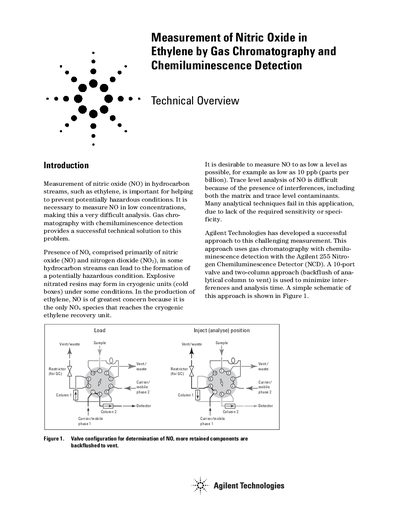
The method uses a 10-port valve and two-column approach with backflush of the analytical column to vent.