
E90077Po 96T IL4 ELISA Kit is used for the quantitative determination of IL4 in porcine serum, plasma or other relevant biological fluids.
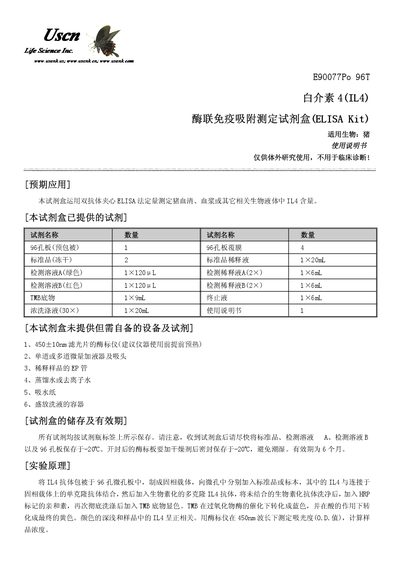
The Uscn E90077Po 96T ELISA kit is designed for quantitative detection of interleukin‑4 (IL‑4) in pig serum, plasma or other biological fluids using a double‑antibody sandwich ELISA. The kit includes pre‑coated 96‑well plates, standards, detection reagents, TMB substrate and a termination solution, together with this instruction manual.
The manual details sample collection, storage conditions, step‑by‑step reagent preparation, incubation times, washing procedures, and data analysis. It also provides the assay’s detection range, limit of detection, specificity information, and safety warnings for handling reagents such as dilute sulfuric acid. This manual is written in Chinese.
| Detection range | 15.6 pg/mL – 1000 pg/mL |
|---|---|
| Limit of detection (LOD) | 7.7 pg/mL |
| Shelf life | 6 months |
| Storage temperature | -20 °C |
The assay can quantify IL‑4 concentrations from 15.6 pg/mL up to 1000 pg/mL.
The lowest detectable concentration is 7.7 pg/mL.
All reagents should be stored at –20 °C, sealed with desiccant, and protected from strong light.