
Key facts
- Brand
- Garmin
- Model
- 530
- Category
- Other
- Industry
- Automotive
- Documents
- 3
- Languages
- EN
- Last added
- 2026-10-22
Start here
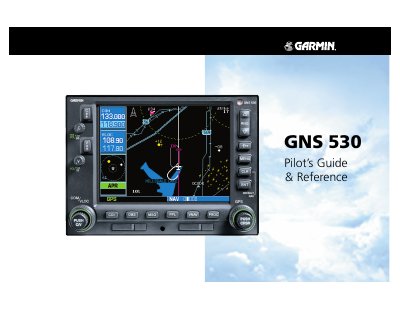
Garmin GNS 530 Pilot’s Guide & Reference
The GNS 530 is a panel‑mounted IFR navigation and communication system designed for aircraft. This guide explains its key functions, controls, and how to operate the unit safely.
The manual covers installation, power‑on procedures, frequency selection, direct‑to navigation, flight planning, approaches, waypoint management, vertical navigation, traffic and weather data, as well as specifications, troubleshooting, and warranty information.
Garmin 530 specifications
| Physical dimensions | 6.25"W x 4.60"H x 11.0"D (15.9 x 11.7 x 27.9 cm) |
|---|---|
| Weight | 9.5 lb (4.3 kg) |
| Display type | 8 color TFT LCD |
| Display size | 4.0"W x 3.0"H (10.2 x 7.6 cm) |
| Display resolution | 320 x 234 pixels |
| Transmit power | 10 Watts |
| Built-in VHF Comm channel spacing | 8.33/25 kHz |
| Max Waypoints/favorites/locations | 1,000 |
| Flight plans capacity | 20 reversible; up to 31 waypoints each |
All Garmin 530 documents by type
Day-to-day operation, settings and troubleshooting. Start here if the product is already set up.
Questions answered in these manuals
How do I invoke the pop-up X530?
Position and click the mouse-pointer anywhere inside the DISPLAY area of the X530 panel in the 3D cockpit.
What does the CDI button do?
It toggles between the VOR/Localizer and GPS as the active navigation device.
How long does the Edge battery last on a full charge?
The Edge can run for approximately 12 hours before it needs to be recharged.
What temperature range is safe for charging the Edge?
Charging is only allowed between 0 °C and 50 °C (32 °F‑122 °F).
What warranty does the Garmin GNS 530 have?
Garmin warrants the GNS 530 to be free from defects in materials and workmanship for one year from the date of purchase, with repair or replacement at no charge for parts and labor.
How can I reduce harmful interference caused by the GNS 530?
If the equipment causes harmful interference, try relocating it or connecting it to a different circuit, and consult an authorized dealer or qualified avionics technician if the problem persists.