
This guide explains two methods for measuring the efficiency of switch-mode power supplies: using a wattmeter and using four digital multimeters.
This course handout for PI University introduces two different methods for measuring the conversion efficiency of switch-mode power supplies. The first method utilizes a wattmeter and two digital multimeters, while the second method demonstrates how to perform the measurement without a wattmeter, though with lower precision. It is important to note that these methods are intended for internal quick assessments and do not follow all steps required for compliance with energy efficiency standards.
The document details the necessary equipment, including programmable AC power supplies, electronic loads, and various multimeter configurations. It explains the theoretical basis for calculating efficiency versus power factor, distinguishing between active power and reactive power. Practical examples are provided for both a wattmeter-based approach and a four-multimeter approach, including specific calculations for input and output power to derive efficiency percentages. This manual is written in Chinese.
You need a programmable AC power supply or autotransformer, an electronic load, a wattmeter, and two digital multimeters.
The multimeter method has lower accuracy and introduces an error of approximately 0.9% compared to the wattmeter method in the provided example.
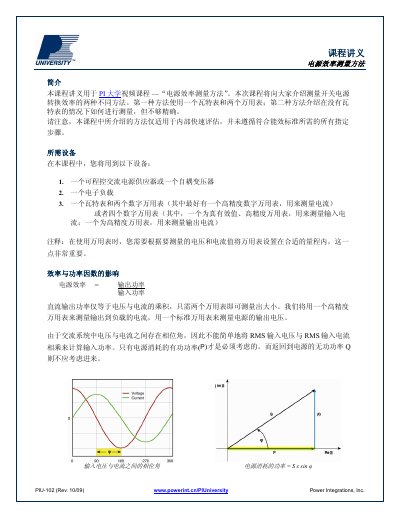
A wattmeter can accurately measure input power because it automatically corrects for the power factor, which is difficult to calculate with just voltage and current meters.