
Icom IC-M330/M330E/M330G/M330GE VHF marine transceiver instruction manual covering features, DSC functions, Channel 16 procedures and precautions.
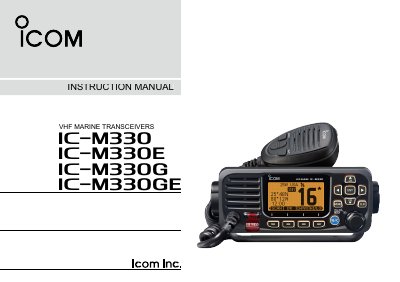
The Icom IC-M330, IC-M330E, IC-M330G and IC-M330GE are VHF marine transceivers. The instruction manual describes the easy-to-read screen and user interface, the Dualwatch and Tri-watch functions for monitoring the Distress channel (Ch 16) and the Call channel, and DSC functions for distress alert transmission and reception as well as Individual, All Ships and Group calls.
It explains emergency procedures for a voice distress call on Channel 16 and a DSC distress call on Channel 70 using the [DISTRESS] key. It also gives installation and safety precautions, including RF exposure limits, a minimum antenna mounting height of 5 meters above the main deck, an MPE radius of about 3 meters, an operating temperature range of –20°C to +60°C, and IPX7 waterproof protection except for the DC power connector, NMEA In/Out leads and AF Out leads.
| Maximum DC power source | 16 V DC |
|---|---|
| Operating temperature range | –20°C ~ +60°C (–4ºF ~ +140ºF) |
| Waterproof protection | IPX7, except for the DC power connector, NMEA In/Out leads and AF Out leads |
| Maximum antenna gain | 9 dBi |
| Minimum antenna height above main deck | 5 meters |
| Estimated MPE radius | about 3 m |
Say "MAYDAY MAYDAY MAYDAY," identify the vessel, give your call sign or other identification, your position, the nature of the distress and any other information that may help the rescue.
While lifting up the key cover, hold down [DISTRESS] for 3 seconds until you hear 3 short beeps and one long beep, then wait for an acknowledgment on Channel 70 from a coast station.
Dualwatch lets you monitor the Distress channel (Ch 16) while receiving on another channel of your choice.
Do not place or leave the transceiver in areas with temperatures below –20°C or above +60°C (–4ºF to +140ºF).