
Instructions for using a fingertip pulse oximeter to monitor blood oxygen levels, including setup, reading results, cleaning, and when to seek medical help.
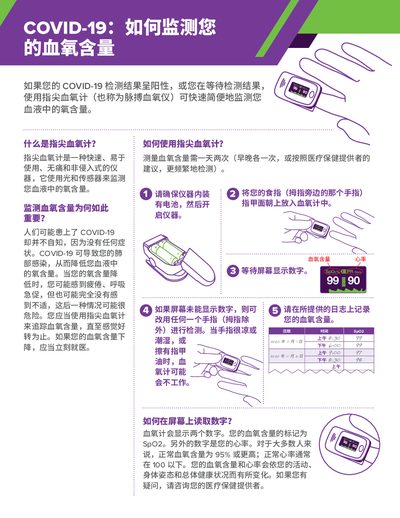
This document provides instructions for using a fingertip pulse oximeter (also known as a pulse oximeter) to monitor blood oxygen levels, particularly for individuals with COVID-19 or waiting for test results. It explains the importance of monitoring oxygen saturation and how the device works using light and sensors. This manual is written in Chinese.
Measure blood oxygen level twice a day (morning and evening, or more frequently as advised by your healthcare provider).
For most people, a normal blood oxygen level is 95% or higher.
This level is very concerning; call 911 immediately or go to the nearest emergency room.
It is not recommended to use the pulse oximeter on children under the age of 14.