
Bosch provides detailed information on its LSF, LSU and LSU ADV lambda sensors, covering technology, specifications, and application benefits.
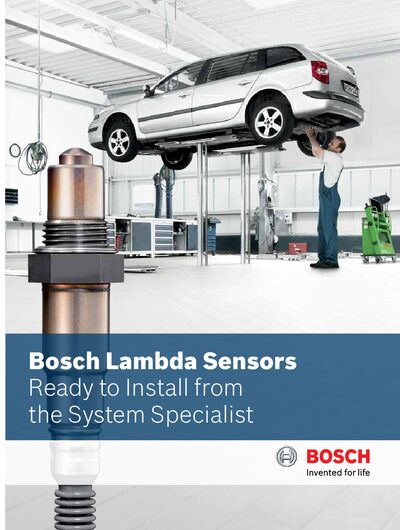
Bosch lambda sensors are used in virtually all gasoline and diesel vehicles worldwide. The company offers a range of sensors, including the switching‑type LSF and the wide‑band LSU series, each designed to meet strict emission regulations and improve fuel efficiency.
The LSF switching‑type sensor delivers fast heater response, low current draw, and a service life up to 240,000 km. The LSU wide‑band sensor measures oxygen over a range of 0.65 to 1, heats up in 5–20 seconds, and provides precise lambda control for gasoline, diesel, and small engines. The LSU ADV version adds ultra‑fast light‑off (≤ 5 s) and enhanced durability for demanding applications.
| Service life (LSF) | up to 240,000 km |
|---|---|
| Heating‑up time (LSU) | 5 to 20 seconds |
| Measurement range (LSU) | 0.65 to 1 (lambda) |
| Ultra Fast Light‑Off (LSU ADV) | ≤ 5 s |
Bosch offers Switching‑Type (LSF) and Wide‑Band (LSU) lambda sensors.
The LSU sensor reaches operating temperature in 5 to 20 seconds, depending on the type.
The LSF switching‑type sensor has a service life of up to 240,000 km.