
This document describes the features and characteristics of the TJA1041 CAN high-speed transceiver, including low-power management, bus fault diagnosis, system's automatic fault-tolerant features, common-mode voltage regulation, I/O level and main controller power supply voltage matching.
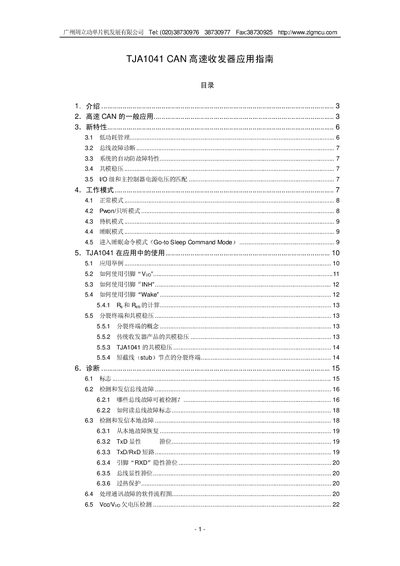
The document provides an overview of the TJA1041 CAN high‑speed transceiver, including its general applications, pin compatibility with other Philips/NXP CAN devices, and electrical characteristics. It details the transceiver’s five operating modes, low‑power management strategies, fault‑diagnosis features, and interoperability with other CAN transceivers.
Additional sections cover wiring recommendations, voltage requirements, common‑mode suppression, and calculation methods for Vcc current consumption in normal and fault conditions. This manual is written in Chinese.
| Package | SO14 |
|---|---|
| CANH Output Voltage | 3.5 V |
| Dominant‑State Differential Input Voltage | 0.9 V |
It supports five modes: Normal, Pwon/Standby, Standby, Sleep, and Go‑to‑Sleep Command Mode.
The TJA1041 is supplied in an SO14 surface‑mount package.
It requires a +5 V Vcc supply.