
A mild TBI, otherwise known as a concussion, is caused by a blow or jolt to the head that disrupts the function of the brain. This fact sheet provides information on mild TBI symptoms and diagnosis, as well as guidance to primary care providers seeing patients who may have long-term health effects associated with mild TBI (concussion).
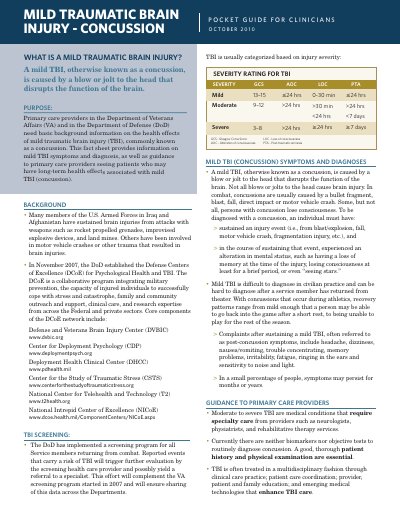
This two-page pocket guide defines mild traumatic brain injury (concussion), lists symptoms and diagnostic considerations, and outlines guidance for primary care providers. It also summarizes recovery tips and resources for VA and DoD clinicians.
It includes a severity rating table and information on the VA Polytrauma System of Care and DoD/VA clinical practice guidelines.
A mild TBI, otherwise known as a concussion, is caused by a blow or jolt to the head that disrupts the function of the brain.
Post-concussion symptoms include headache, dizziness, nausea/vomiting, trouble concentrating, memory problems, irritability, fatigue, ringing in the ears, and sensitivity to noise and light.
A vast majority of patients will be symptom free within 3-6 months.
Tips include getting plenty of sleep, keeping a daily journal, returning to normal activities gradually, avoiding high-risk activities, following doctors' directions, not drinking alcohol, and being patient.