
This document describes the midline abdominal incision, a very commonly used abdominal surgical incision.
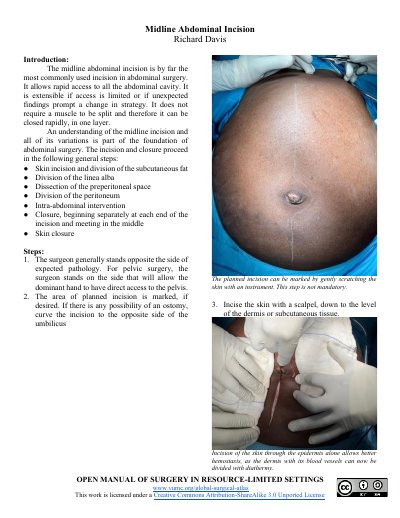
This document describes the midline abdominal incision, the most commonly used incision in abdominal surgery, and its general steps from skin incision through closure. It covers marking the incision, dividing skin and subcutaneous fat, entering the peritoneum, and closing the fascia with running sutures.
The text provides numbered surgical steps, including placement of retention sutures, suture bite depth, and the recommended 4:1 suture-to-wound length ratio. It also notes precautions for pelvic and upper abdominal exposure and advises against adding antibiotics to irrigation.
The midline abdominal incision is by far the most commonly used incision in abdominal surgery.
A running, slowly absorbable or non-absorbable suture such as polydioxanone (PDS) or polypropylene (Prolene) is used.
The ratio of suture length to wound length should be 4:1.
For pelvic surgery, the surgeon stands on the side that will allow the dominant hand to have direct access to the pelvis.