
This document describes how to use the green bin correctly, including what can be put in the green bin and what cannot be put in the green bin.
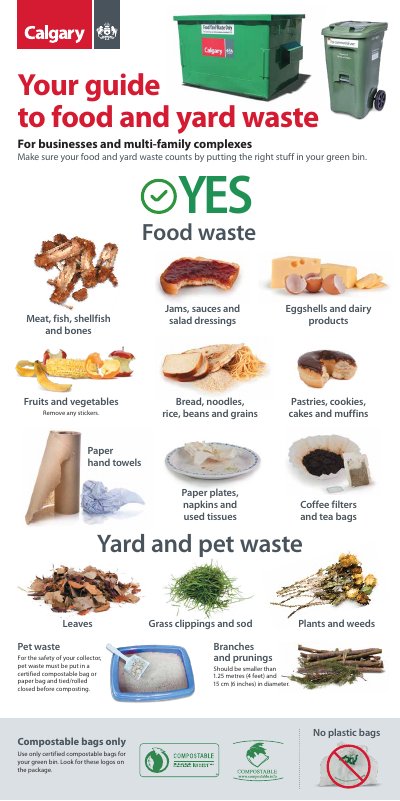
This two-page guide explains how to sort food and yard waste for the green bin at businesses and multi-family complexes. It lists the food waste, paper and yard or pet waste that can be composted, and shows which items must be kept out of the bin.
The guide also covers certified compostable bags, including the logos to look for on the package, and gives three kitchen compost tips: lining a kitchen pail, filling it with food scraps and emptying it into the green bin. A closing page lists items that do not belong in the food and yard waste bin.
Yes. All food, including meat, bones and dairy, can go in the green bin — just scrape your plate.
No. Plastic bags do not break down and contaminate the finished compost; use certified compostable bags, paper bags or newspaper instead.
Pet waste must go in a certified compostable bag or paper bag that is tied or rolled closed before composting.
You can purchase one at local hardware stores or reuse any container with a lid, such as an ice cream bucket with a lid.