
3M Diesel Engine Protector is a lubricant additive specifically designed for diesel engines. It helps reduce wear, improve fuel efficiency and extend engine life. The product is suitable for all types of diesel engines, including turbocharged and naturally aspirated engines.
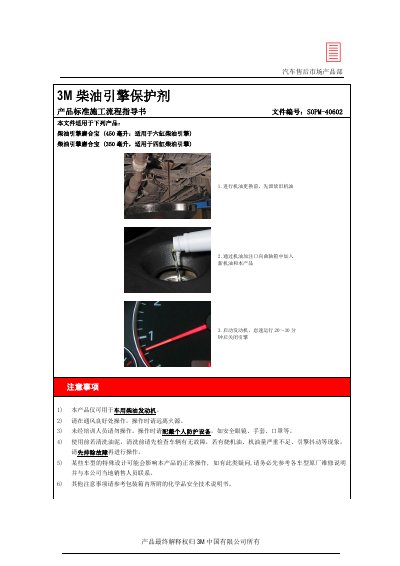
This is a one-page Chinese-language standard application process guide (文件编号 SOPM-40602) from 3M China's automotive aftermarket product department for the 3M Diesel Engine Protector (柴油引擎保护剂). It applies to the diesel engine break-in additive in a 450 ml version for six-cylinder diesel engines and a 350 ml version for four-cylinder diesel engines.
The guide lists the three application steps: drain the old oil before the oil change, add new oil together with the product through the oil filler port into the crankcase, then start the engine and let it idle for 20 to 30 minutes before switching it off. It closes with precautions covering use only in automotive diesel engines, working in a well-ventilated area away from ignition sources, personal protective equipment, checking and clearing vehicle faults before cleaning sludge, referring to the vehicle manufacturer's service instructions for special designs, and the chemical safety data sheet supplied in the packaging. This manual is written in Chinese.
| Applicable product (450 ml) | Diesel engine break-in additive, 450 ml, for six-cylinder diesel engines |
|---|---|
| Applicable product (350 ml) | Diesel engine break-in additive, 350 ml, for four-cylinder diesel engines |
| Engine idle time after application | 20 to 30 minutes, then switch off the engine |
| Intended engines | Automotive diesel engines only |
| Document number | SOPM-40602 |
Drain the old oil before the oil change, add new oil and the product through the oil filler port into the crankcase, then start the engine and idle it for 20 to 30 minutes before shutting it off.
It may only be used in automotive diesel engines.
Check the vehicle for faults first; if there is oil burning, seriously low oil level or engine shaking, clear the fault before proceeding.
Work in a well-ventilated place away from ignition sources, and wear personal protective equipment such as safety glasses, gloves and a mask; untrained persons should not perform the procedure.