
This is a manual for bullfrog farming
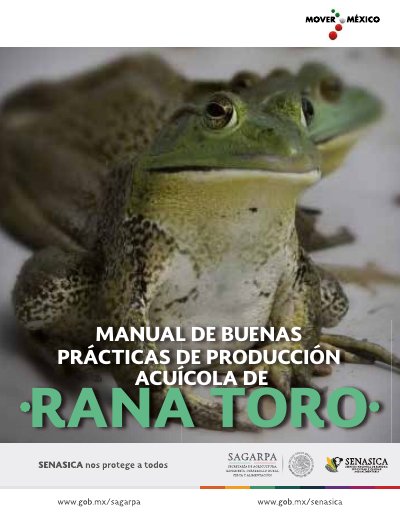
This manual sets out good aquaculture production practices for bullfrog (rana toro) farming, with food safety as its central focus. The introduction explains that good practices are a set of interrelated recommendations, activities and standards that together keep a product's sanitary quality and safety for human consumption, and that in bullfrog production they are aimed at reducing contamination risks by identifying biological, chemical and physical hazards throughout the culture cycle: egg, tadpole, grow-out and harvest.
The document then reviews the Codex Alimentarius and other international references, the biological cycle of the bullfrog and its production systems, hazard identification and biosecurity, critical points and risk assessment, and farm-level implementation (site selection, personnel hygiene, facilities and cleaning, pest control, water and ice supply, waste management and aquaculture health criteria). Later sections cover water quality monitoring, feed selection and handling, chemical and drug management, harvest, slaughter and evisceration, traceability, training and internal verification programmes, followed by a glossary, bibliography and list of collaborators. This manual is written in Spanish.
Fue creado por las Naciones Unidas en 1963 como una comisión conjunta de la FAO y la OMS, para proteger la salud del consumidor y asegurar prácticas justas en el comercio de alimentos.
No. El manual indica que todos los países solicitan certificación sanitaria al comprar ancas de rana, pero no se requiere ningún papeleo CITES.
Según la FAO citada en el manual, los principales países productores son Argentina, Brasil, China Taiwán, Malasia, México, Singapur y Uruguay.
Se dirigen a reducir los riesgos de contaminación en todos los pasos del proceso de cultivo: huevo, renacuajo, engorda y cosecha.