
This manual introduces the DreamStation 2 CPAP Advanced Auto CPAP Advanced machine's safety information, usage instructions, device setup, connectivity, cleaning and care, and more.
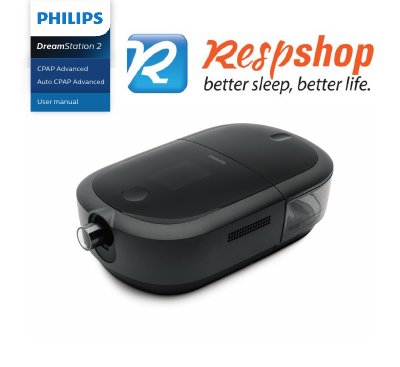
This user manual provides instructions for setting up, operating, and maintaining the Philips Respironics DreamStation 2 CPAP Advanced Auto CPAP Advanced device. It includes safety information, system overview, device setup, troubleshooting, connectivity, accessories, cleaning, and technical specifications. The device delivers positive airway pressure therapy for obstructive sleep apnea and must be used under physician supervision with approved accessories.
The manual also covers safety precautions, such as proper placement of the device, handling of oxygen, cleaning procedures, and warnings for specific patient conditions. It includes sections on Bluetooth connectivity, troubleshooting pop-up messages, and technical specifications including environmental, electrical, and humidity parameters.
| Intended Use | Delivers positive airway pressure therapy for the treatment of Obstructive Sleep Apnea in spontaneously breathing patients weighing over 30 kg (66 lbs). |
|---|---|
| Maximum Pressure | Up to 20 cmH2O, with possible maximum of 40 cmH2O in fault conditions. |
| Water Capacity | Not specified in text. |
| Heater Plate | Not specified in text. |
| Humidity | Not specified in text. |
| Declared Dual-Number Noise Emissions | In accordance with ISO 4871. |
| Pressure Accuracy | Not specified in text. |
| Maximum Flow Rate (Typical) | Not specified in text. |
| IEC 60601-1 Classification | Not specified in text. |
| Electrical | Not specified in text. |
It delivers positive airway pressure therapy for the treatment of Obstructive Sleep Apnea in spontaneously breathing patients weighing over 30 kg (66 lbs).
It may contraindicate use for patients with bullous lung disease, pathologically low blood pressure, bypassed upper airway, pneumothorax, or pneumocephalus. Caution is advised for patients with CSF leaks, cribriform plate abnormalities, prior head trauma, or pneumocephalus.
Oxygen must comply with local regulations, a Philips Respironics pressure valve must be placed in-line, and oxygen should not be used while smoking or near open flames. Turn the device on before turning on the oxygen and off before turning the device off.